
Winter is coming, temperatures are dropping and, at some point, the forecast will inevitably predict snow. The gritters are out, the WhatsApp groups are buzzing and parents are already asking the familiar question: Will the school be open tomorrow?
Headteachers face a difficult decision: do they keep the school open or declare a snow day?
It’s a decision that can attract criticism whichever way they turn. Open the school and someone might slip on an icy path. Close it and parents face childcare difficulties, pupils miss lessons and questions may be raised about whether the closure was really necessary.
But perhaps there’s a bigger question we should be asking: is closing a school always the safest option?
The Case for a Snow Day
There are, of course, circumstances where closing a school is the right decision.
Icy roads and pavements can make journeys dangerous for pupils, parents and staff. Heavy snowfall, poor visibility and disruption to public transport can make getting to school difficult or unsafe.
Staffing is another important consideration. If teachers and support staff cannot safely get to school, maintaining adequate supervision and safe operating arrangements may become difficult.
And then there’s the school site itself. Icy pathways, snow-covered entrances, unsafe access routes or heating failures could make the premises unsuitable for pupils and staff.
Sometimes, closing is undoubtedly the right decision. Keeping a school open should never come at the expense of people’s safety.
But Is School Actually the Safer Place?
We can become so focused on the risks of keeping schools open that we sometimes overlook the wider consequences of closing.
Schools can provide structured, supervised environments. They have trained staff, first aid provision, safeguarding arrangements and established safety procedures.
Some risks can also be managed. Slippery paths can often be gritted, unsafe playgrounds can be closed, access routes can be restricted and additional precautions introduced.
Now consider the wider impact of a closure.
For some families, an unexpected school closure can create significant childcare difficulties, particularly when parents or carers still need to work. Some children may have limited supervision or access to suitable learning environments at home.
For vulnerable pupils, school can provide far more than education. It’s a place of warmth, routine, meals, safeguarding and stability.
A school closure doesn’t eliminate risk. It changes the circumstances and may shift some of the responsibility for managing those risks elsewhere.
This doesn’t mean schools should stay open simply to provide childcare or because families may find closure difficult. It means the wider impact should form part of a balanced decision.
And What About Lost Learning?
Every snow day can mean valuable teaching time is lost.
Remote education can help pupils continue learning when a school has to close. However, it may not provide the same experience as being physically present in the classroom.
Not every pupil has access to suitable technology, a quiet learning environment or support at home. Younger children and those with additional needs may face particular challenges.
Maintaining face-to-face education should therefore carry significant weight in the decision, provided the school can operate safely.
The Department for Education’s guidance encourages schools to remain open where it is safe to do so, while recognising that temporary closure may be necessary where there is a risk of injury or the site is inaccessible.
And What About Lost Learning?
This is where a slightly different approach to risk assessment can help.
Rather than focusing solely on the hazards associated with keeping a school open, headteachers should consider the potential risks and benefits of both opening and closing.
Looking at both options side by side can help create a more balanced picture of the circumstances and the potential consequences of each decision.
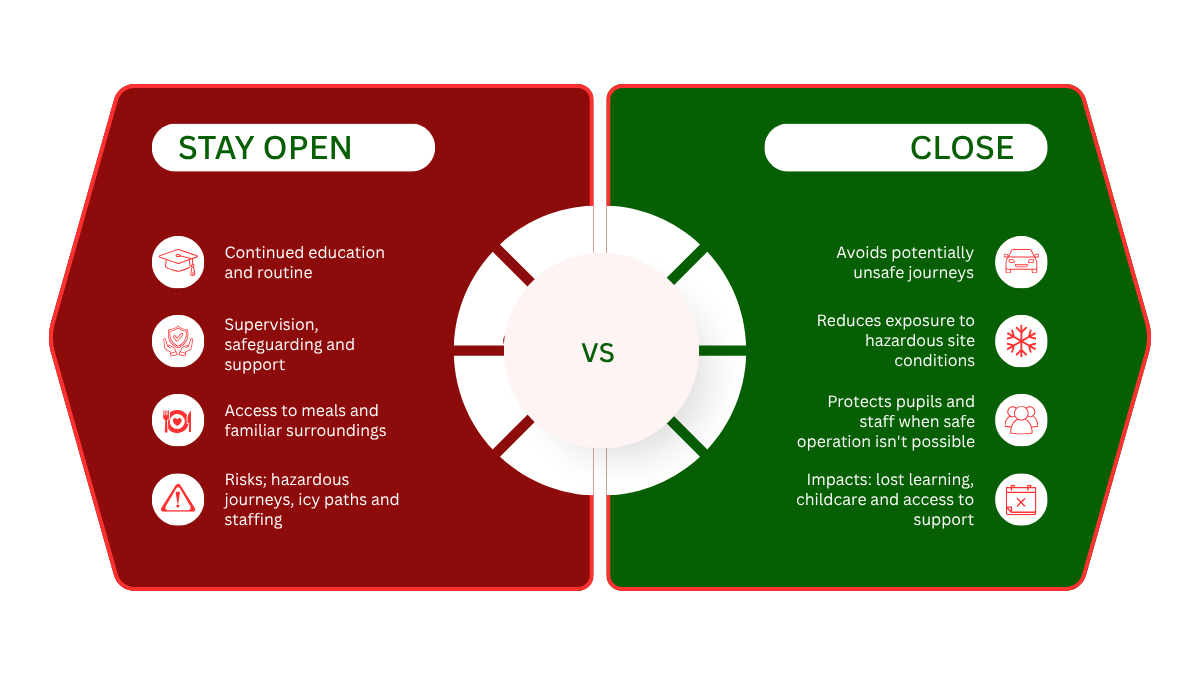
There is no one-size-fits-all answer. The right decision will depend on the conditions, the school site, staffing arrangements and the needs of the pupils and wider school community.
This isn’t about finding reasons to keep a school open at all costs. It’s about recognising that both options have consequences and making a decision based on the circumstances at the time.
Practical measures may help make opening possible, such as gritting priority pathways, restricting access to unsafe areas, reviewing staffing arrangements and introducing additional precautions. Where closure is necessary, schools may need to consider remote learning, support for vulnerable families and clear communication with parents and carers.
Keeping a clear written record of the information considered, the risks and benefits identified, the control measures available and the reasons for the chosen approach can also be valuable if parents, governors or trustees later ask how the decision was reached.
Professional Judgement Matters
Headteachers understand their schools, their staff and their local communities better than anyone.
They know which local roads are particularly hazardous, which pupils rely heavily on being in school, how accessible their premises are and whether they can maintain safe staffing and supervision arrangements.
That knowledge and experience matter.
Professional judgement should, however, be supported by current information, a proportionate assessment of the circumstances and the school’s agreed procedures.
This doesn’t mean producing a lengthy document every time snow is forecast. A clear record of the conditions, the risks and benefits of each option, the control measures available and the reasons for the decision can help demonstrate a considered approach.
Conditions can also change throughout the day. A school that opens safely in the morning may need to review its arrangements if the weather deteriorates, travel becomes more difficult or the site becomes unsafe.
Ultimately, there will always be someone who disagrees with the decision.
But good health and safety management isn’t about eliminating every conceivable risk or choosing the option least likely to attract criticism.
It’s about understanding the bigger picture, considering the circumstances and making an informed decision that puts the safety and wellbeing of pupils and staff first.
Sometimes, that decision may be to keep the school gates open. At other times, closing will be the safest and most appropriate option.