

WhatsApp is a quick, familiar messaging platform that many staff already use in their personal lives. It often feels like a simple solution for day-to-day school communication – whether that’s coordinating between colleagues, sharing updates, or managing time-sensitive messages.
However, in a school setting, convenience doesn’t always equal suitability. When used for professional communication, WhatsApp can introduce a range of risks around data protection, safeguarding, and professional boundaries that are not always immediately obvious.
Where the Practical Issues Begin
The main challenge with WhatsApp is that it sits outside of school-controlled systems.
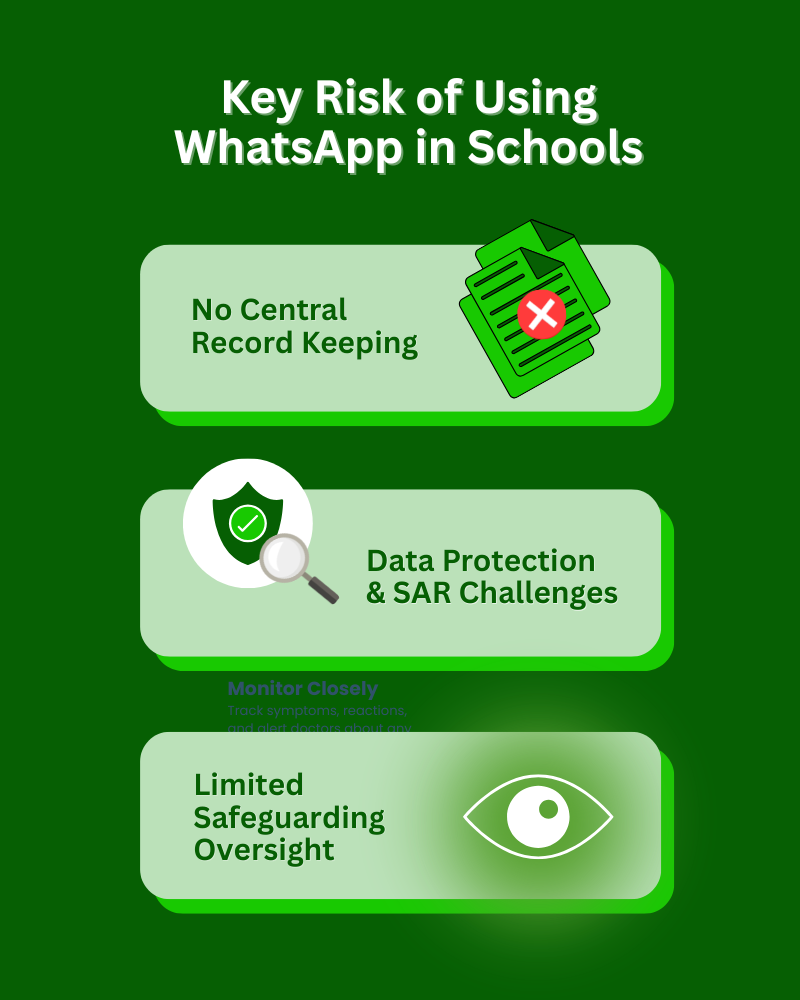
Messages are stored on personal devices rather than within platforms managed by the school or trust. This means they cannot be centrally monitored, archived, or easily retrieved when needed. In practice, this creates a number of challenges, particularly when records of communication are required. For example, if a Subject Access Request (SAR) is made, any school-related personal data shared via WhatsApp may still fall within scope – even if it sits on a personal device. Locating and reviewing these messages can therefore be difficult and inconsistent.
There is also the issue of human error. Group chats can be created quickly, and it is very easy for the wrong person to be added unintentionally. In some cases, this has already led to sensitive information being shared inappropriately, including incidents that have resulted in regulatory action by the Information Commissioner’s Office (ICO).
Date Protection and Safeguarding Considerations
From a data protection perspective, WhatsApp introduces a level of risk that is difficult to fully control in a school environment.
Personal data relating to staff, pupils, or parents can be shared more widely than intended, and once it is sent, the school has limited visibility or control over how it is stored or forwarded. There is also the added risk associated with personal devices. If a device is lost, stolen, or accessed by an unauthorised person, school-related information may be exposed.
From a safeguarding point of view, the lack of oversight is equally important. Communication that takes place outside official systems cannot be easily monitored, making it harder to ensure that appropriate professional boundaries are being maintained.
Should Schools Be Using WhatsApp?
WhatsApp is not inherently unsuitable, but it is often misapplied in professional settings. Used carefully, it can support quick internal coordination between staff. However, it should not be relied upon as a formal communication tool.
A sensible approach is to treat WhatsApp as optional and limited, while ensuring that all official communication takes place through school-controlled systems such as Microsoft Teams, Google Chat, or other approved platforms.
What Appropriate Use Looks Like
If WhatsApp is used at all within a school setting, it needs clear boundaries. Its use should be limited to internal staff communication only and kept away from anything formal or sensitive.
In practice, this means WhatsApp:
- Should not be used to communicate with pupils or former pupils
- Should not be used to contact parents or carers about school matters
- Must not be used to share sensitive or personal data
- Should never replace official school communication systems
- Should not be used for safeguarding discussions or pupil-specific information
Key Safeguards Staff Should Follow
Where WhatsApp is used, schools should ensure expectations are clear and consistently understood. Staff should:
- Keep communication strictly work-related and professional
- Use WhatsApp only when approved systems are unavailable
- Ensure devices are secured with passwords or PIN protection
- Report any safeguarding or data protection concerns immediately
- Avoid sharing photos, videos, or audio recordings of individuals
- Delete school-related information when it is no longer required, in line with retention policies
At the same time, WhatsApp should never be used to store or back up school data in personal cloud accounts or external services.
Maintaining Professional Boundaries
One of the more subtle risks with WhatsApp is how easily it can blur professional boundaries. Because it is informal and widely used outside working hours, it can unintentionally create expectations of immediate responses or encourage communication outside normal professional channels.
To manage this, schools should be clear about:
- Messaging expectations and working hours
- The purpose of each group
- Who should (and should not) be included
- The importance of keeping tone professional and appropriate
Clear boundaries help protect both staff wellbeing and professional standards.
Subject Access Requests (SARs)
WhatsApp can create real challenges when responding to Subject Access Requests.
Because messages are stored on personal devices and are not centrally managed, it can be difficult to identify, retrieve, and review all relevant information. This creates both operational and compliance risks. For this reason, staff should avoid using WhatsApp for any communication that may need to be formally recorded or disclosed in future.
Setting Clear Expectations Through Policy
Schools should ensure that their Acceptable Use or Communication Policies clearly set out the position on WhatsApp and similar messaging tools.
At a minimum, this should make clear that:
- WhatsApp is not an approved system for formal communication
- Its use must be limited to internal, operational matters only
- It must not be used to communicate with pupils or parents
- Sensitive or personal data must never be shared via the platform
Having clear, consistent expectations helps reduce risk and ensures staff understand where WhatsApp fits within the wider communication framework
Final Thoughts

WhatsApp can be a useful tool for informal and time-sensitive communication, but it carries clear limitations in a school environment.
The risks around data protection, safeguarding, and professional boundaries mean it should never replace formal school systems.
With clear expectations, appropriate safeguards, and a consistent approach to communication, schools can ensure that WhatsApp remains what it is best suited for – a supporting tool, not a core system.