

We know what pressure feels like. We see it walking into offices, stepping into difficult meetings, or scrolling through emails that somehow multiplied overnight.
But here’s the truth we don’t say often enough:
Stress in school leadership isn’t just a wellbeing issue – it’s a safeguarding one.
National safeguarding guidance increasingly emphasises that leaders need time, space and support to hold the emotional and ethical complexity of the role. Effective supervision is explicitly recognised as a core support for those carrying significant safeguarding responsibility.
This makes sense when you pause and consider it.
Stress storms your thinking. It narrows creativity and reduces resilience. And when you are exhausted, decision-making becomes harder – thresholds blur, escalation feels uncertain, confidence wobbles.
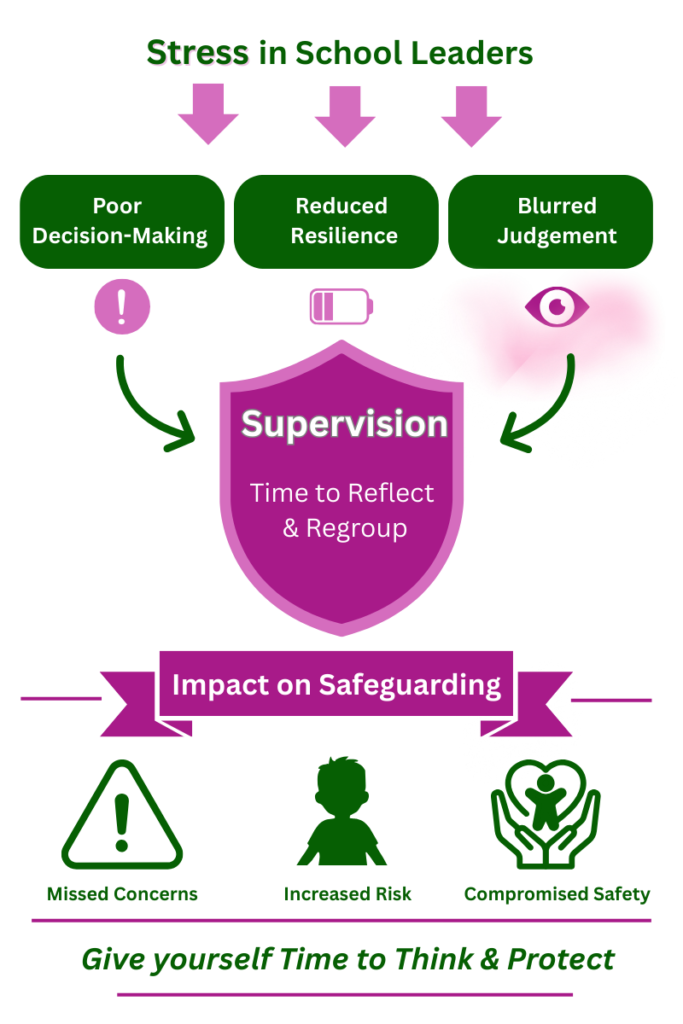
Teaching unions have repeatedly pointed to workload, behaviour and safeguarding demand as the biggest contributors to rising stress. We also know from research in other professions that reflective supervision helps people manage precisely these pressures, improving clarity, emotional regulation and professional judgement.
So when supervision offers an hour of calm, confidential thinking time, it is not a luxury. It is not indulgent. It is part of keeping children safe – because it helps keep you steady.
Supervision helps you sort through the noise, name what feels overwhelming, and think through complex cases without carrying the emotional weight alone. It gives you permission to pause – which, in schools, can feel almost radical.
And if you’re reading this thinking, “I don’t have time for supervision,” then you may be the person who needs it most.
Your wellbeing is not separate from your safeguarding leadership. It sits at the heart of it.